


Brew Bar
- Regular price
-
$89.00 - Regular price
-
- Sale price
-
$89.00
100% From Our Land
We harvest Storm-Felled Oak trees from our 225 acre property for our solar-powered woodshop.
Hefty 1” thick Oak - 9” diameter.
We grill with charcoal made from woodshop scraps.
Couldn't load pickup availability


More Details
100% from Our Land
- The Oak trees have been growing on our land for 100 years.
- I harvest some sunlight shining on our land to power the woodshop.
It's Cracked!
- Wood shrinks when it dries.
- Since the outer rings are larger, they shrink more than the inner rings.
- The crack will not continue to grow because the wood is done drying.
Sterilized
All my wood is heat-treated in an electric kiln.
I exceed established heat-treatment standards for killing insects and eggs.
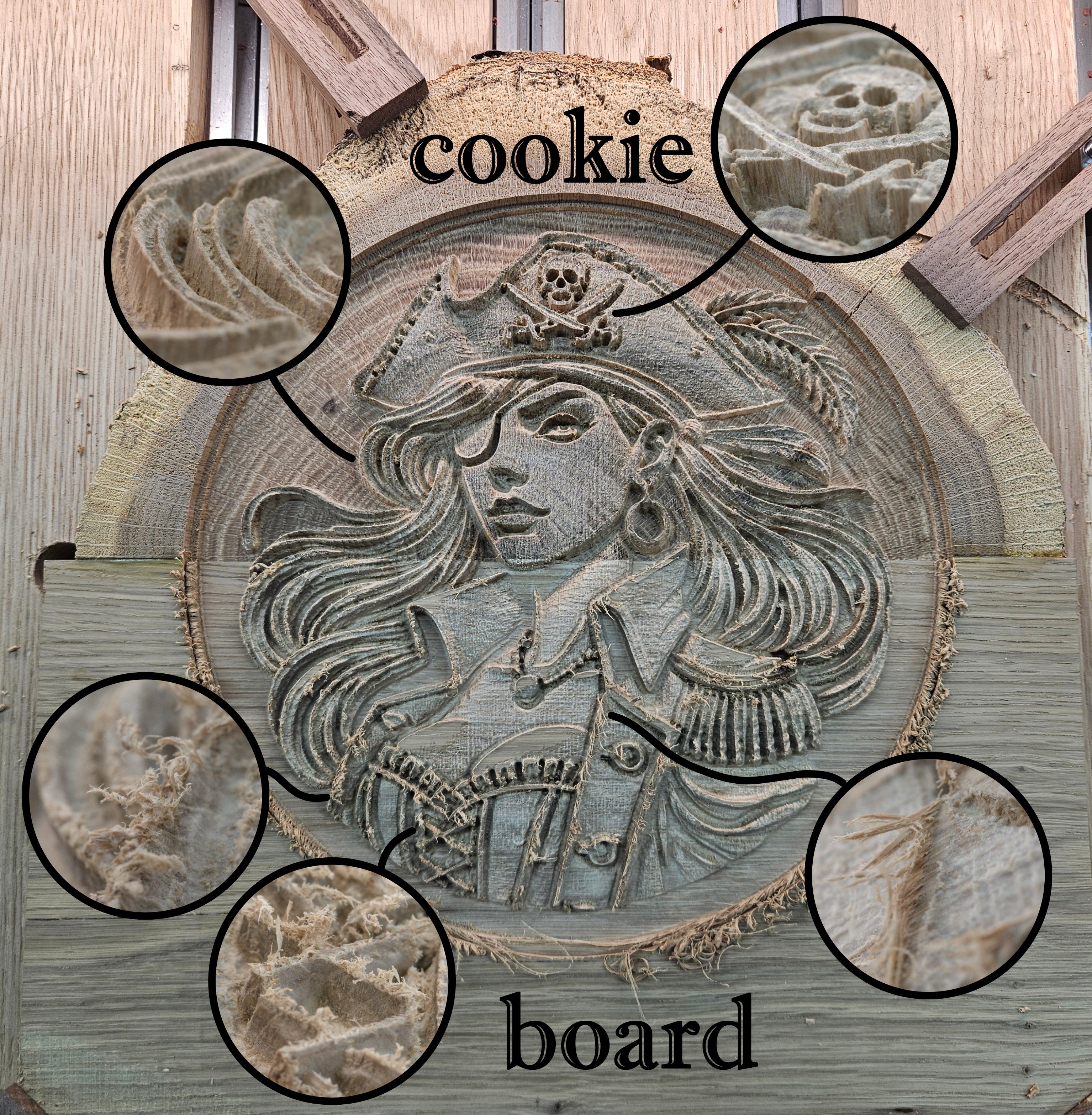
Cookie VS Board
Judge for Yourself
The only difference between the top and bottom is the grain direction...But why does it make such a difference?
Imagine wood grain as rings of straws running up the trunk of a tree.
- Cookie - I trim the ends of the straws. "End Grain". It remains a bundle of tightly packed straws with deep roots that support each other.
- Board - The bundle of straws is laying on its side. The engraving process cuts the top layer of straws into a bunch of little segments that chip away easily between the growth rings.
The results speak for themselves.
Tree Facts:
-
Pine Prohibition
America's first tree laws weren't environmental. The King claimed all White Pines over 24" for ship masts.
Over half the mature trees in many forests were marked off-limits with the 'King's Broad Arrow'.
This became one of the grievances leading to the American Revolution after 80+ years of control over these resources. -
Branches Don't Grow Like That
A low branch doesn't get higher off the ground as the trunk grows.
Branches only grow longer from the tips, and that includes the trunk. -
Trees Don't Heal
Trees cannot heal their wounds.
Damaged cells remain damaged forever.
They isolate the damaged area with chemical and physical walls and just keep growing. -
It's Getting Bigger
Every year, each acre of forest grows by about 0.55 cords.
This means collectively, our 200 forested acres grows about 110 cords EVERY YEAR.
Each big tree that blows over is only about 1 cord. -
Functionally Extinct
1 in 4 trees in Appalachia used to be an American Chestnut.
These giants produced nutritious, sweet nuts (acorns are bitter) and rot-resistant lumber.Over a 40 year period, an imported fungus killed 4 billion trees.
This cornerstone species is now functionally extinct—one of the greatest ecological disasters in American history.